The Adisoft Technologies IPO is a book-built issue worth ₹74.10 crore and consists entirely of…

Citius Transnet InvIT IPO Listing 2026 – Allotment, Demat Credit & BSE SME Debut
The Citius Transnet InvIT IPO will open for subscription on April 17, 2026, and close on April 21, 2026. This IPO is structured as a book-built issue, with the company aiming to raise approximately ₹1,105 crore. The issue consists entirely of a fresh issue worth ₹1,105 crore, along with an offer for sale of an unspecified number of equity shares with a face value yet to be announced.

The price band for the IPO is yet to be disclosed. In terms of investor allocation, Qualified Institutional Buyers (QIBs) are allotted 75%, while High Net-worth Individuals (HNIs) have 25% reserved. The retail portion is currently unspecified.
The IPO is scheduled to be listed on both the BSE and NSE on April 24, 2026, with the allotment expected on April 22, 2026.
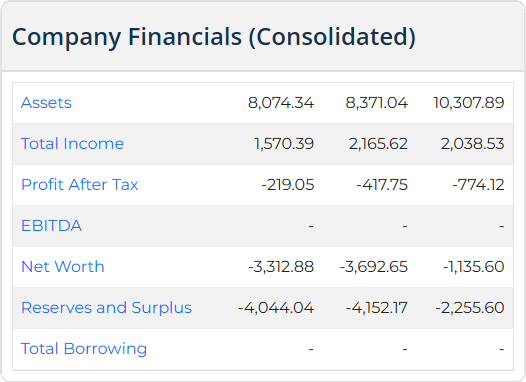
From a financial perspective, the company reported revenue of ₹2,165.62 crore in FY2025, compared to ₹2,038.53 crore in FY2024. Although the company continues to incur losses, it has shown improvement, reducing its net loss to ₹417.75 crore in 2025 from ₹774.12 crore in 2024.
As on 21 April 2026, 5PM IST, The allotment of shares for Citius Transnet Investment Trust IPO of ₹1105 crores is expected to take place on 24 April 2026.
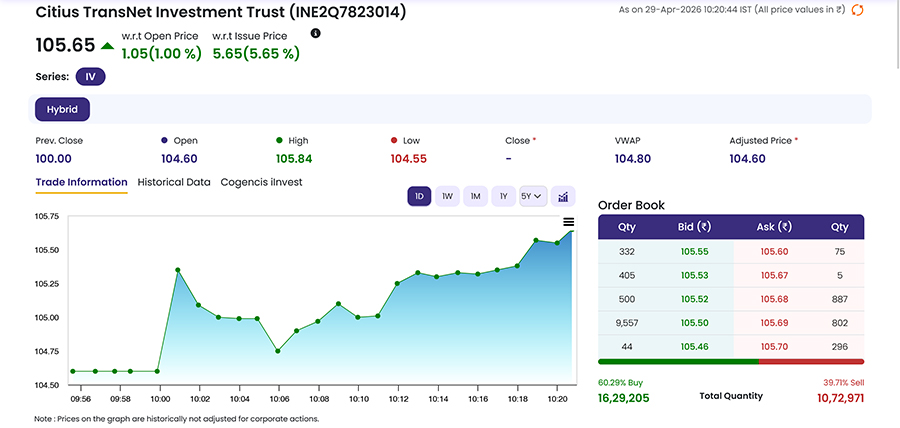
Citius Transnet InvIT IPO Listing Details
| Listing Date | April 29, 2026 |
| BSE Code | 544753 |
| NSE Code | CITIUSINVT |
| ISIN Code | INE2Q7823014 |
| Offer Price | ₹99 to ₹100 |
| Face Value | ₹0 |
| Listing Price | ₹104.60 |
Image Reference : https://www.nseindia.com/
Company Overview
Citius Transnet InvIT is an infrastructure investment trust focused on transportation assets, particularly road projects across India. The proceeds from the IPO will mainly be used to acquire stakes in various project SPVs (special purpose vehicles) and for general corporate purposes.
The trust operates a diversified portfolio of toll and annuity-based road assets spread across multiple states, aiming to generate steady cash flows over time.

Related Posts