Aureate Tradde IPO debuted flat on the BSE, listing at ₹70, which was equal to…

Biopol Chemicals IPO Listing 2026: Debut Performance, GMP Trend and Market Reaction
Biopol Chemicals SME IPO has finally made its much-anticipated market debut in 2026, drawing significant attention from retail and institutional investors alike. After a strong subscription phase and an orderly allotment process, the company’s shares were listed on the NSE SME platform, marking a key milestone for this specialty chemicals firm and giving investors their first chance to trade the stock in the secondary market.

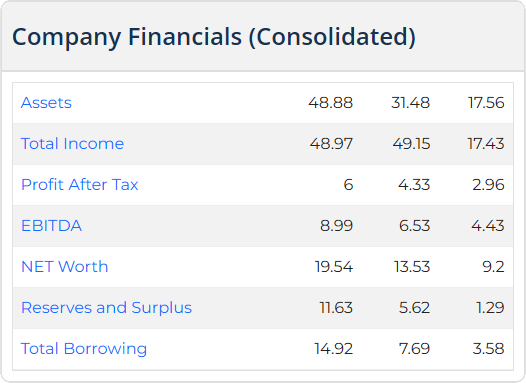
The Biopol Chemicals IPO opened for subscription in February 2026 with a price band of ₹102 to ₹108 per share, and the overall issue size was valued at approximately ₹31.26 crore. The IPO witnessed robust demand, ultimately being oversubscribed nearly 22 times, highlighting investor interest despite mixed market conditions. With the subscription period closing on 10 February 2026, allotment was finalized and investors eagerly looked forward to the listing day.
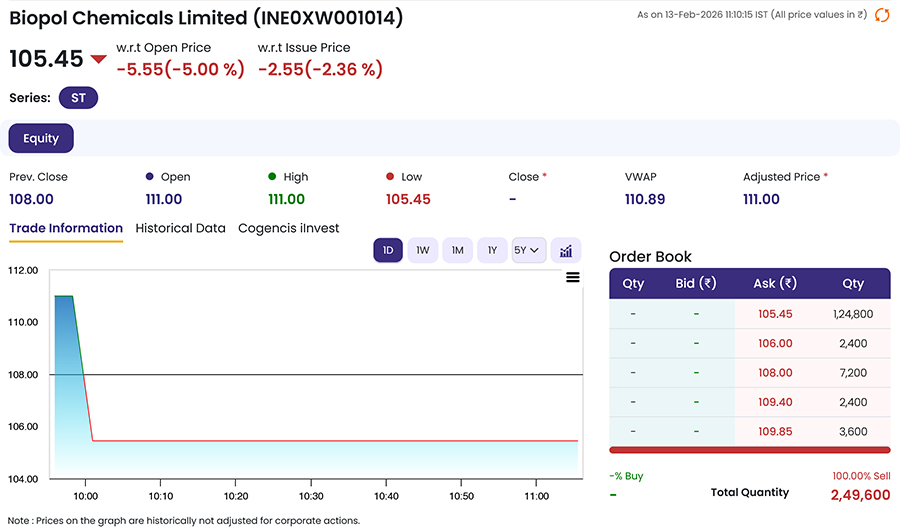
Image Reference : https://www.nseindia.com/
When the Biopol Chemicals IPO shares debuted on 13 February 2026, the initial trading session showed a positive start. The stock listed with an opening premium of around 3 percent against the issue price on the NSE SME segment. This initial uptick reflected a positive sentiment among short-term investors who were anticipating a healthy listing bounce after the oversubscription.
However, the market environment on the listing day was challenging. Broader stock markets were under pressure due to profit-taking and volatility, and Biopol Chemicals was not entirely immune to these headwinds. After listing with a premium, the stock faced selling pressure and saw price corrections during intraday trading. At one point, the share touched a lower circuit band, registering a sharp decline from the initial levels. This fluctuation indicated mixed sentiment where initial buyer enthusiasm gave way to market volatility and profit-booking by some traders.

Grey market premium (GMP) for the Biopol Chemicals IPO had been relatively modest ahead of the listing, signaling a tempered expectation among unofficial market participants. GMP is often viewed as an informal indicator of likely listing performance, though it is not an official benchmark. In the case of Biopol Chemicals, the GMP hovered close to neutral levels, suggesting that many traders did not expect a strong listing spike. While the stock’s eventual listing premium validated some optimism, the subsequent volatility reflected broader market sentiment and risk appetite.
Investors who were allotted shares in the Biopol Chemicals IPO had their holdings credited to demat accounts on 12 February 2026, a day before listing. For many, this timing allowed them to prepare for the debut and set trading strategies accordingly. Those who chose to hold long-term will now watch how the company performs operationally and whether it can translate strong IPO demand into sustained post-listing momentum.
Market participants often look at the listing performance of SME IPOs as a gauge of investor confidence and broader sentiment toward smaller companies. The performance of Biopol Chemicals on its debut highlighted that even oversubscribed issues can face headwinds when broader indices are under pressure. Short-term gains were limited despite the positive listing premium, indicating cautious trading behavior among participants.
In conclusion, the Biopol Chemicals IPO 2026 delivered a notable debut with a listing premium of around 3 percent, followed by volatile price action amid broader market weakness. Investors who participated in the IPO will now assess the company’s business fundamentals and growth prospects to make longer-term decisions. While the initial trading was marked by both optimism and caution, the performance on 13 February 2026 sets the stage for how the stock may fare in subsequent sessions. As with all IPO investments, understanding both listing outcomes and underlying business drivers will be crucial for informed investing.

Related Posts