Escalating tensions in West Asia following fresh military action involving the United States, Israel and…
Galgotias University AI Summit RoboDog Row: Misrepresentation Sparks Backlash
At the India AI Impact Summit 2026 in New Delhi, a controversy erupted when Galgotias University appeared in the spotlight for all the wrong reasons. During the event, one of the university’s representatives introduced a quadruped robot named “Orion,” claiming it was an innovation developed by the university’s Centre of Excellence. The clip of the presentation circulated widely on social media and soon sparked widespread criticism after online users quickly identified the device as the Unitree Go2, a commercially available robot manufactured by Unitree Robotics in China. The model is commonly sold online in India and priced between ₹2 lakh and ₹3 lakh, underscoring the misrepresentation.

Within hours of the video going viral, the summit organisers reportedly asked Galgotias University to vacate its pavilion and remove its exhibit entirely. The university responded with an official apology, stating that its representative, Professor Neha Singh, was “ill-informed” about the technical origins of the showcased robot and was not authorised to speak to the media. According to the institution, the error occurred because she spoke in her enthusiasm without accurate information, leading to the confusion.
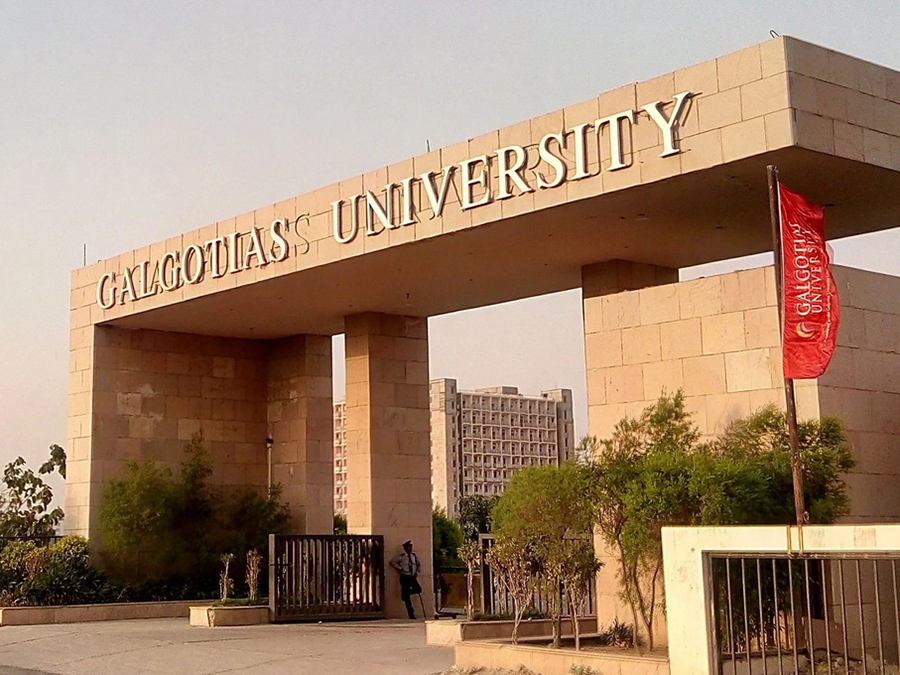
In its statement on X (formerly Twitter), Galgotias University stressed that it had not built the robo-dog and “never claimed” to have developed it. The university reiterated that the device was acquired as part of its AI resources for student learning and experimentation. Officials emphasised the importance of transparency and responsible representation while affirming that the robodog was a learning tool rather than an in-house creation.
The row quickly transcended social media reaction and became part of a larger debate on misinformation and credibility at high-profile technology events. Government officials, including IT Secretary S. Krishnan, weighed in, stating that “misinformation cannot be encouraged” at such summits, and underscoring the need for factual accuracy in technology showcases. The backlash was especially sharp given that the summit is promoted as a global event for innovation and artificial intelligence.
Adding to the public discourse, Professor Neha Singh’s LinkedIn profile briefly displayed an “open to work” status after the incident, prompting speculation about her employment status. However, the university clarified that she has not been suspended and remains employed while an internal investigation continues to determine how the miscommunication occurred. Officials reiterated that terminating her contract had not been confirmed, and the LinkedIn change alone did not signify any formal action.
Public reaction was swift and intense. Social media users, commentators and critics accused the university of misrepresenting its capabilities, with many highlighting the disconnect between marketing narratives and genuine technological development. The episode also sparked discussions about how academic institutions present emerging technologies at international events, with some calling for greater oversight and accountability.
Observers noted that while the intention may have been to showcase access to advanced robotics tools as part of student exposure, the resulting perception was one of exaggeration and miscommunication. The summit, attended by key global leaders and tech executives, was meant to highlight innovation, but for Galgotias University, the event turned into a cautionary tale about clarity, representation and credibility in academic and tech circles.

Related Posts